
The Bold Fight Against Institutional Abuse
FILL OUT THE FORM BELOW TO SEE IF YOU QUALIFY FOR COMPENSATION
The Bold Fight Against
INSTITUTIONAL ABUSE
In the halls of power and within the walls of institutions, there's a problem that lurks in the shadows: ABUSE. This isn't just any kind of harm—it's the kind that comes from those who are supposed to lead and protect us. These leaders, often with a lot of influence, sometimes use their position to take advantage of others.
Protection. Confidentiality. Justice.
By selecting "Submit" and submitting this form, I confirm that I am over 18 years of age, and that I have reviewed and accepted the terms and conditions and privacy policy of LitigationNotification.com. I also agree to the disclosure of the information I provide on this website to legal and non-legal service providers, as well as partners, affiliates, and service providers. Moreover, I consent to receive communications, both human and/or AI-driven, via email and telephone, including SMS text messages by Justice In Numbers and it’s partners, using the contact details I have provided, regardless of my inclusion of in the "Do not call" registry. I acknowledge that my agreement to receive messages is voluntary and if I choose not to receive communication, I will opt out where applicable or not submit this request.
However, people are rising to challenge this issue.
Movements have sprung up, with MeToo being one of the most well-known. It started a wave of courage, with many stepping forward to share their stories. These brave voices are sparking real change. Moreover, the fight against abuse isn't just in courtrooms or protests. It's also about making sure everyone knows about these issues. When more people understand what's happening, they can help stop it. We all play a part in this fight.
Understanding
Institutional Abuse
In the halls of power and within the walls of institutions, there's a problem that lurks in the shadows: ABUSE. This isn't just any kind of harm—it's the kind that comes from those who are supposed to lead and protect us. These leaders, often with a lot of influence, sometimes use their position to take advantage of others.


Timeline of Evolution of the MeToo Movement
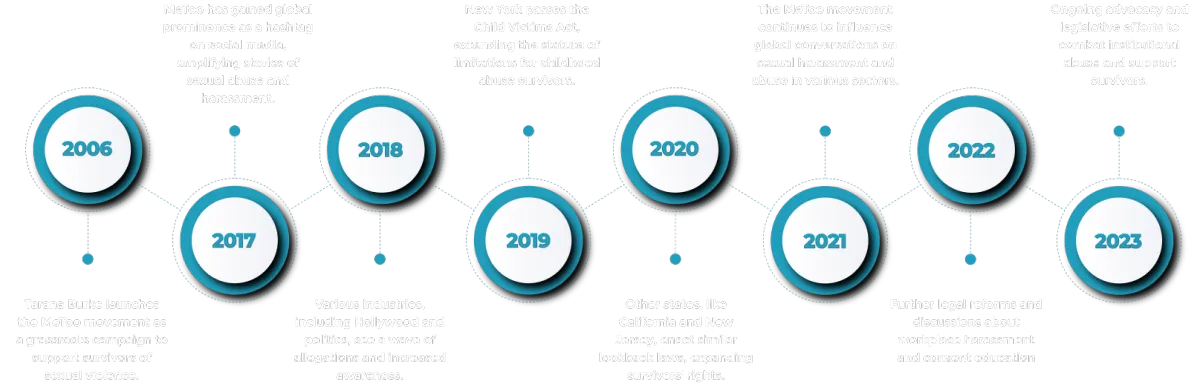

Tarana Burke launches the MeToo movement as a grassroots campaign to support survivors of sexual violence.

MeToo has gained global prominence as a hashtag on social media, amplifying stories of sexual abuse and harassment.

Various industries, including Hollywood and politics, see a wave of allegations and increased awareness.

New York passes the Child Victims Act, extending the statute of limitations for childhood abuse survivors.

Other states, like California and New Jersey, enact similar lookback laws, expanding survivors' rights.

The MeToo movement continues to influence global conversations on sexual harassment and abuse in various sectors.

Further legal reforms and discussions about workplace harassment and consent education

Ongoing advocacy and legislative efforts to combat institutional abuse and support survivors.
Legal Landscape and
"Lookback" Laws
In the quest for justice, "lookback" laws have become beacons of hope. These laws open a window of time for victims to step forward and take legal action, even if the abuse happened years ago. In the past, many victims couldn't speak up due to strict time limits. But now, with these new laws, the doors to the courtroom are reopened.
In New York, for instance, there's been a powerful change. They've passed a law that lets victims of childhood abuse bring cases forward until they are much older. This change has given many people a second chance to seek justice. Comparing New York to other places, we see a patchwork of laws. Some areas are following New York's lead, while others are still catching up.
But one thing is clear: the world is beginning to recognize that justice should not have an expiration date.


Resources and Support
for Victims
Moving on to resources and support for victims, we find a network of help that wasn't always there. Imagine a web of hands, ready to catch those who've fallen. That's what these resources are like. They're here to help victims find their footing again and walk the path of healing. These resources come in many forms. There are hotlines where a caring voice awaits at the other end of the line, ready to listen and guide. Shelters are offering a haven for those who have nowhere else to turn. And there are counseling services that provide a space for victims to work through their pain and find strength again.
The Role of Data and
Public Record
When it comes to the role of data and public records in combating institutional abuse, we're talking about the power of information. Data acts like a flashlight in a dark room, revealing truths that were once hidden. By tracking incidents of abuse and the outcomes of cases, we can see patterns that might otherwise go unnoticed.
Moreover, when this information is part of the public record, it means that everyone can see it. This transparency is crucial because it holds institutions accountable for their actions. It's hard to ignore numbers and facts when they are out there for the world to see. Looking at case studies, we learn how data-driven approaches have helped. For example, when numbers showed that certain policies were failing, organizations were forced to make changes.
Data has also helped survivors find each other, creating communities of support and solidarity.


Future Directions
As we look ahead, the future directions of the fight against institutional abuse seem promising. Activism and advocacy are evolving with technology, creating new platforms for change. Social media has become a battleground where awareness is spread and support is mobilized. It's a place where silence is broken and movements gain momentum.
So, the future is about action, education, and continued advocacy. It's about creating a world where the next generation looks back and sees the progress we've made. It's about ensuring that the fight against institutional abuse is not just a moment in time but a sustained movement towards a just and respectful society.
Contact Us Today
For Your Free, In-Depth Case Evaluation
WE ARE ON YOUR SIDE

We are on your side

We are Available 24/7

No Fees. Unless You Win
DISCLAIMER:
This website is for informational purposes only. It does not constitute legal advice, and no attorney-client relationship is formed. The accuracy and completeness of the information cannot be guaranteed. Users should consult with an attorney for advice on their specific legal issues. We are not responsible for any actions taken based on the information provided on this site. We strive to help you find information to fight for your rights.
Privacy Policy | Terms & Conditions